Chalk pastel pencils put soft pastel pigment inside a wooden barrel, so the medium gains a point without losing color strength. They exist for detail work: eyes, tight edges, controlled strokes on toned paper. We make them at Hongyun Penindustry in Qingyuan, Zhejiang, and this guide covers the techniques and the specifications behind them.
What a Chalk Pastel Pencil Actually Is
The core is the same dry pastel medium artists use in stick form: pigment mixed with a chalk-based filler and a minimal gum binder, extruded into a 4 mm rod and sealed inside a wooden barrel. Nothing about the medium changes when it goes into a pencil. What changes is control. A sharpened point places color where a thumb-wide stick cannot, and the barrel keeps the artist's hands clean enough to hold the paper.
The naming confuses buyers, so it is worth clearing up once. "Chalk pastel" is the retail name for soft pastels. The chalk in the name refers to the inert filler in the core, not to blackboard chalk — which is lime colored with dye and carries a fraction of the pigment load. When a supplier's cut sheets say "chalk pastel pencil," they mean a pigment-first dry pastel core. That is why the format costs more per stick than a school colored pencil and why it behaves so differently on paper.
Three relatives frame the category. Soft pastel sticks cover ground fast and blend with a finger, but they crumble in a school bag and cannot hold a point. Oil pastels use a wax-and-oil binder that never powders — and never blends the way dry pastel blends, which is either a feature or a limitation depending on the user. The chalk pastel pencil sits between them as the precision instrument: powdery like a stick, controllable like a pencil. In our experience, retail sets sell the pencil format precisely because the end user is usually not a pastel specialist — the pencil is the pastel a normal person can actually use.
Five Techniques That Move Pastel Pencil Sets Off the Shelf
Technique knowledge sells this category. A set demonstrated by someone who knows five moves outsells a set that sits in its box, and the moves are not complicated.
Blocking with the side of the pencil. Tilt the barrel almost flat and pull broad strokes with the exposed side of the core. This is how a sky, a ground, or a portrait background gets laid down — fast, loose, and with the powdery coverage the medium is bought for. It also uses core quickly, which is exactly why sets exist: end users burn through pale sky colors and need the replacement economics of a boxed range.
Hatching and cross-hatching. With the pencil upright again, directional strokes build tone in layers the user controls. Cross the stroke direction between layers and the tone deepens without the mud that comes from pressing harder. Pressing harder is the beginner instinct. Pastel pigment responds to layer count, not force.
Frankly, most shoppers pick up a pastel pencil and press like it is a graphite HB. That is how cores snap — and how a demo set dies on the counter.
Blending in order. Fingers blend small areas, a paper stump or tortillon handles mid-size transitions, and a soft brush sweeps the largest fields. The discipline is direction: blend light into dark, never the reverse, or dark pigment drags across everything it touches. A one-direction rule is the difference between a controlled gradient and a gray smear.
Scumbling and feathering. Scumbling drags broken, irregular color over an existing layer so the under-layer shows through — foliage, fabric texture, broken sea light. Feathering strokes barely touch the paper, laying the faintest transition film over an edge that came out too hard. Both techniques exploit the powder: no other pencil medium can put a color down and then let it half-vanish on purpose.
Pencil over stick. This is the professional workflow, and it sells two SKUs at once. Soft pastel sticks lay the ground and the big masses; chalk pastel pencils come in for the last ten percent — the eye, the window frame, the signature line of a branch. Artists who work this way buy sticks and pencils as one system, which is why art retailers merchandise them adjacent. A capable counter demo runs: ochre ground blocked with a stick side, sienna shadow hatched in pencil, one feathered transition, done in ninety seconds.
Sharpening the Softest Core in the Pencil Family
A pastel core is the most fragile thing anyone puts inside a wooden pencil, and sharpening is where it fails. The 4 mm diameter helps — a thick core survives what a thin one will not — but technique decides most of it. Handheld sharpeners with aggressive blades eat soft cores and snap points. A craft knife, shaving the barrel down in slow passes with the blade angled away from the core, then a few strokes on a sandpaper pointer to shape the tip, is how artists keep a pastel pencil usable down to a stub. Classrooms and demo counters use hand-crank sharpeners with a pastel or soft-core setting; the slower cutting speed is the entire point.
From the manufacturing side, sharpening performance is a barrel problem as much as a core problem. The core has to sit centered — an off-center core presents uneven wood on one side and snaps on the first pass. The wood has to shave cleanly rather than splinter — basswood earns the paper-box format on weight and uniform grain, and cedar, with lower cutting resistance and grain that holds steady through humidity swings, carries the two tin formats. And the barrel has to be dried to spec: our pastel barrels are kiln-dried to 8–12% moisture, because wood that moves after assembly pinches or cracks a core that soft. Hongyun Penindustry's pastel line runs a point-retention check on every batch — sharpen, draw, count the strokes the tip survives — because a core that dies in the sharpener never gets judged on its color.
Paper, Tooth, and Whether to Fix
Pastel pigment sits on the surface of the paper, held by the paper's tooth. Plain office paper is too smooth to hold it — the dust wipes off. Pastel papers carry a deliberate grain graded fine to coarse; cold-press watercolor paper around 200 gsm is the common substitute. Toned grounds in mid-gray or kraft brown are where pastel pencils shine, because the paper itself becomes the middle value and both lights and darks get drawn. Fixative exists for two moments: a light spray between layers grips the dust so the next layer can hold, and a final spray reduces (never eliminates) smudging in storage. Every fixative darkens and slightly dulls the color it touches, which is why exhibiting artists frame finished pastels under glass instead and why the spray decision belongs to the artist, not the retailer.
One rule of thumb survives every debate: spray is a working tool, not a preservation guarantee.
From Technique to Specification: What a Buyer Should Demand
For an art-supply buyer, every technique above converts into a line of the purchase specification. Four checkpoints do the conversion work.
- Core diameter and pigment load. 4 mm is the chalk pastel specification — thinner "pastel-tinted" colored pencils cannot lay the powdery layer the medium is bought for. Approve a physical gold sample and keep it; adjectives like "vibrant" are not specifications.
- Barrel wood and moisture. The category runs on two woods, and both appear in our own range: basswood in the volume format — lighter in weight, which matters at container scale, and uniform-grained enough to shave clean around a soft core — and cedar in the two tin formats, the traditional artist barrel, typically two to three times the cost of basswood and positioned for gift and studio retail. Whichever your program specifies, insist on a stated kiln-dried moisture range of 8–12%; a supplier who cannot quote one is quoting price, not process.
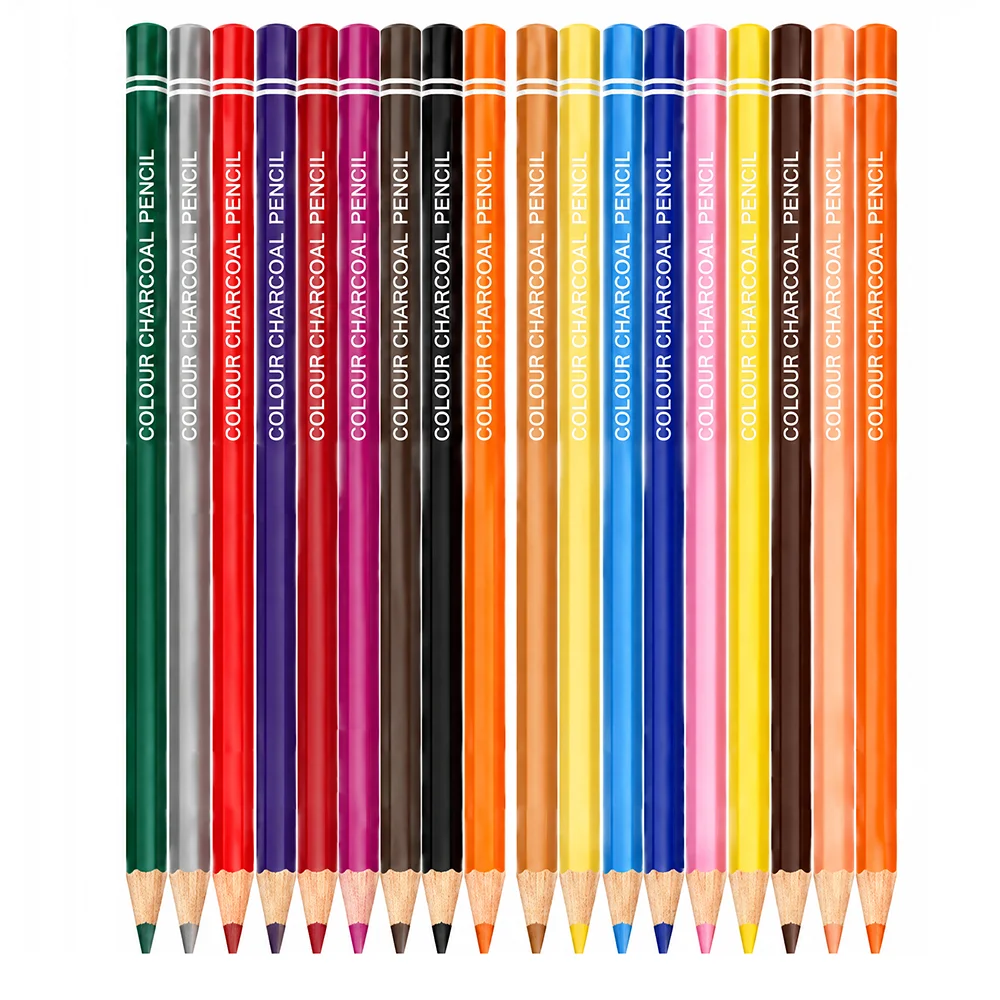
- Color coding. Head-dipped ends let a shop restock a single shade without a molded tray; full-barrel lacquer reads brighter on the shelf but forces the whole set to ship as one unit. Match the coding system to how your customers actually reorder.
- Documentation. EN71-3 heavy-metal testing, REACH SVHC screening, FSC chain-of-custody for the barrel wood, and ISO 9001 quality management — arriving as documents in the order file, not promises in an email.
One honest note, because buyers hear the opposite at every trade fair: a stationery-price pastel set will not out-draw an artist-brand set at the easel. What a Hongyun Penindustry factory-direct set can do is hold the specification — core diameter, moisture range, compliance stack — at a price that leaves room for retail margin. Where that trade-off sits is your positioning decision, not ours.
Putting the Range Together
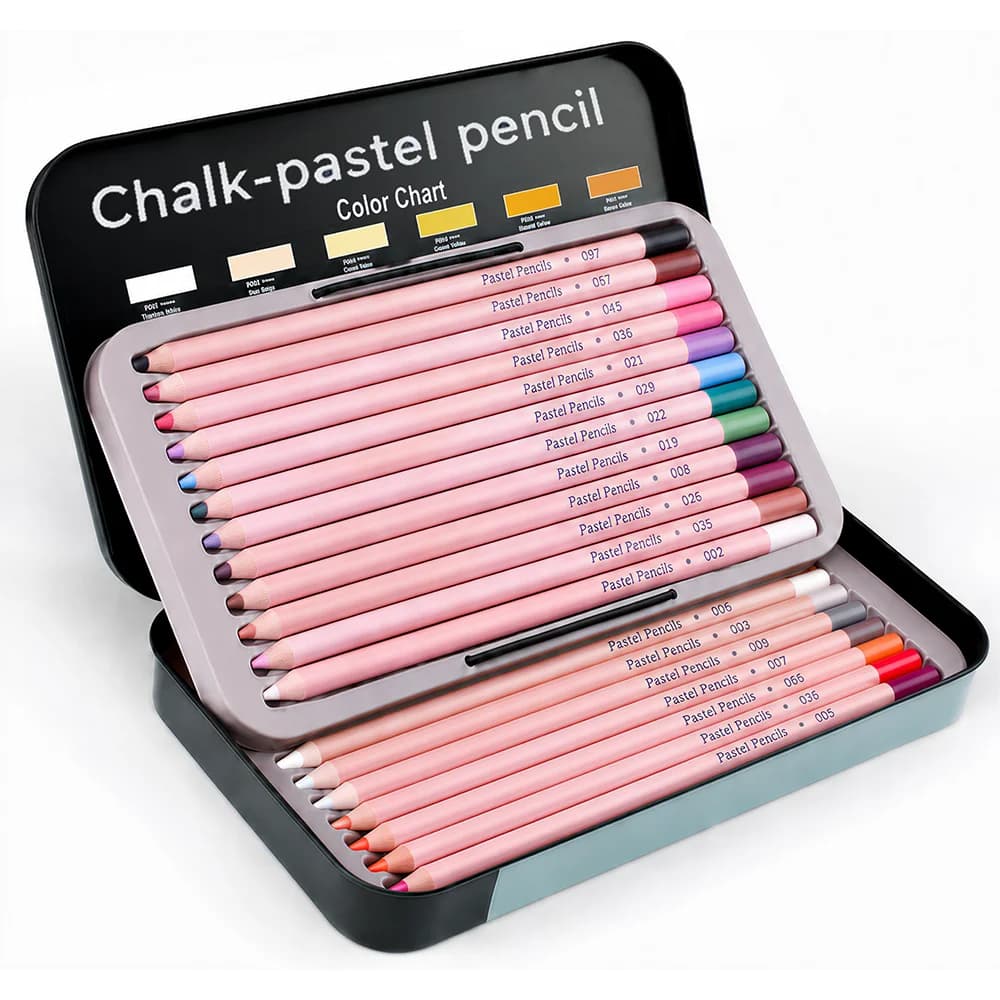
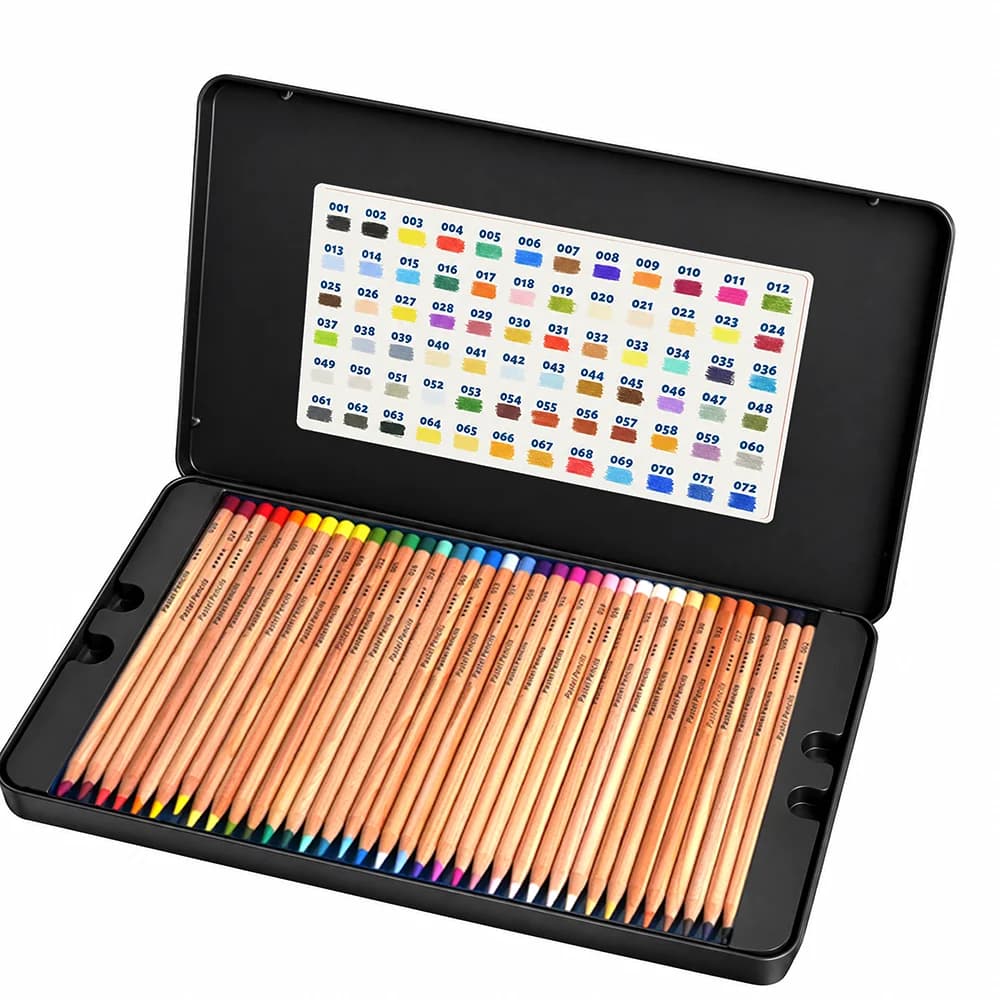
The three formats in our chalk pastel pencil sets map to three shelf positions. The 24-color paper box is the volume format for stationery chains and online art channels — genuine dry pastel medium at a price that survives a container crossing. The 24-color tin with natural-finish cedar barrels, end-dipped for color identification, is the gift and museum-shop format, where the object itself does the selling. The 72-color tin with its two-layer blister tray is the studio format for the serious hobbyist, the count that sits between the impulse 12 and the professional 72 and lands as most opening orders. All three run the same 4 mm core, the same 8–12% moisture spec, and the same compliance stack — basswood barrels in the paper box, natural cedar in both tins.
Qingyuan County Hongyun Penindustry Co., Ltd. has manufactured wooden-cased pencils since 2004, exporting to more than 50 countries, and the pastel line is produced on the same platform as every other barrel we ship. For programs that need custom palettes, alternate color counts, or private-label packaging, the specification conversation starts at our custom pencil OEM service — and every quoted program begins with a sample set, so your artists can test the techniques above on the actual cores before the bulk order is placed.